


Rachel Brewer, 44, lives in Colorado and works as a physician. Together with her husband JP, who’s also a doctor, are raising three daughters, Sydney (13), Ellie (12) and Charley (10).
Somewhere between running from work to school and juggling all the after-school activities, she still finds time to run off and tackle 100K races.
I met Rachel many years ago when I first came to the USA to join her family as an au pair. I stayed two years in her household, watching, observing, and learning. We talked a lot about life in the USA, life in the Czech Republic, and we often compared the two countries. I was also fascinated by how busy with so many activities a household could be.
On Becoming a Doctor
When did you realize you wanted to be a doctor?
I didn’t have an “aha moment” about wanting to become a doctor. My dad is a physician, so I grew up around medicine. It was more like background noise—it just felt like something I was supposed to do. But I didn’t fully realize it until college.
I graduated a semester early and volunteered at a free clinic in South Bend, Indiana. That experience confirmed that medicine was the right path for me. I realized it was something I enjoyed doing. But it was very much a long-term journey to understanding that this is what I want to do.
So, what was your dream career?
One of my biggest dreams was to become a sports journalist.
If you had asked me when I was 12, that would have been my first response. I was completely obsessed with sports, statistics, and baseball. Before the internet and cell phones, I would sit at the dinner table reading the newspaper, poring over baseball stats—it was just what I did. Honestly, it was kind of weird, looking back. 🙂
But you became a doctor. How important is participating in sports for getting into university? Can you receive a scholarship if you’re involved in sports?
I think that sports are not necessarily the most important factor. What’s truly important is showing commitment to an activity—whether that’s sports, music, theater, dance, or any other pursuit.
Universities want to see that you can dedicate yourself to something beyond yourself, something that requires effort and perseverance. When universities evaluate candidates, they’re looking for evidence that you can set and achieve goals that go beyond just academics or screens. It’s about demonstrating that you can commit to something meaningful.
Does it matter what type of sport, music, or other activity you choose? Does it influence which university you should attend?
I think so – yes and no.
I have my own personal stories. As you know, I’m a triplet, and my other two sisters both went to school to study music. One went to Northwestern in Chicago, and the other went to Oberlin in Ohio – both of which are very strong music schools. That obviously influenced their choice of where to go to school.
Ultimately, I didn’t pursue music and instead played a lot of sports. Notre Dame, which is well – known for both its sports and academics, was a fitting choice for me.
That said, certain interests definitely guide you toward specific universities, but there’s no single rule.
Why did you study in Indiana? There’s not much there. 🙂
Notre Dame is a very well-known university. When I visited as a senior in high school, I was captivated by its atmosphere. It’s known for its sports and academics. The campus has a unique look and feel, and people really connect with it.
When I visited, I just knew: “This is where I’m going.” And when I make a decision, even now, I commit to it and follow through.
Also, I grew up in Kansas City, Missouri, after being born in Colorado, so the Midwest wasn’t entirely unfamiliar to me. Indiana is closer to Kansas City, so it wasn’t a huge leap geographically. But honestly, I wouldn’t live in Indiana again!
Can you share how much it costs to become a doctor?
There’s a huge range when it comes to the cost of becoming a doctor in the United States.
The pathway includes attending college, graduating, going to medical school for another four years, and then entering a residency program. Residency can last anywhere from three to seven years, depending on your specialty.
During the residency program, you do earn some money, but in relation to the hours worked, it’s essentially minimum wage, somewhere around $50K to $70K per year.
The costs of college and medical school vary widely depending on whether you attend a public or private institution, receive financial aid, or are awarded scholarships. Some people graduate from medical school with zero debt, while others leave with over $300,000 in loans.
I was fortunate to attend a public medical school in the state where I grew up, which significantly reduced my costs. I graduated without any debt, which was huge.
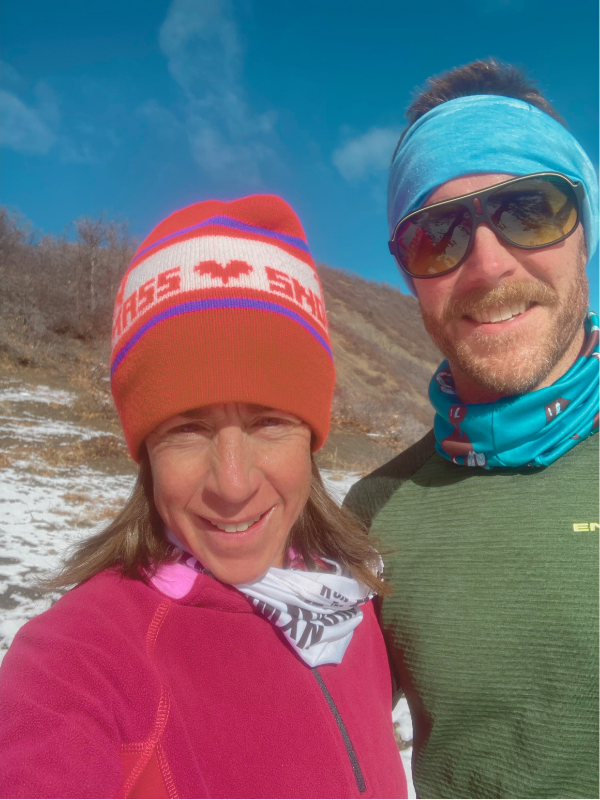
My husband, JP (at the picture), attended a private medical school in Ohio and left with nearly $200,000 in debt. It took us nearly 10 years, working together, to fully pay off that debt. Some people are still paying off their loans almost 20 years later.
10 years as two of you? That’s a long time…
Yes, it is. I have some medical school colleagues who graduated with me in 2006, and here we are in 2024, and they’re still paying off their student loans. That’s over 20 years of debt! It’s pretty crazy how much money people spend to become doctors, and it can take decades to pay it all back. But yeah, it’s a lot.
Well, but we all know how rich you doctors are!
That’s the thing. I didn’t truly have a real job until I was 31 years old. The training process takes up your entire twenties. If you go straight through from college to medical school to residency, you don’t start making real money until your early thirties. And even then, it depends on your specialty.
There are some specialties that pay very well and others that don’t, so the income varies widely. But one thing is for sure: we earn our money. We work incredibly hard, and we spend over a decade in training. If you add college, medical school, and residency together, you’re essentially in school forever.
When JP and I met, we were both in residency. You do get paid during residency, but the salary is very low—essentially minimum wage considering the number of hours you work. We were broke. We didn’t have any money at all.
You should have seen JP’s car when we met—it was this old, beat-up thing that barely ran. And when he proposed to me, he couldn’t even afford a proper ring. It took him a long time to save up for it.
So, it’s very different than what people think. While doctors do eventually make good money, it takes years to get there. The journey is full of financial stress, long hours, and sacrifices before you reach stability. It’s not as glamorous as it looks from the outside.
Running and 100K Races
When did you start running?
My first marathon was when I was 20, while I was at Notre Dame in college. The funny thing is, before running that marathon, I had never run more than five miles in my life! It’s a bit ridiculous looking back—I rode my bike to the start line, ran the marathon, thought, „Oh, great,“ and then just rode my bike home.
That is a good start. 😀 And when did you run your first 100K?
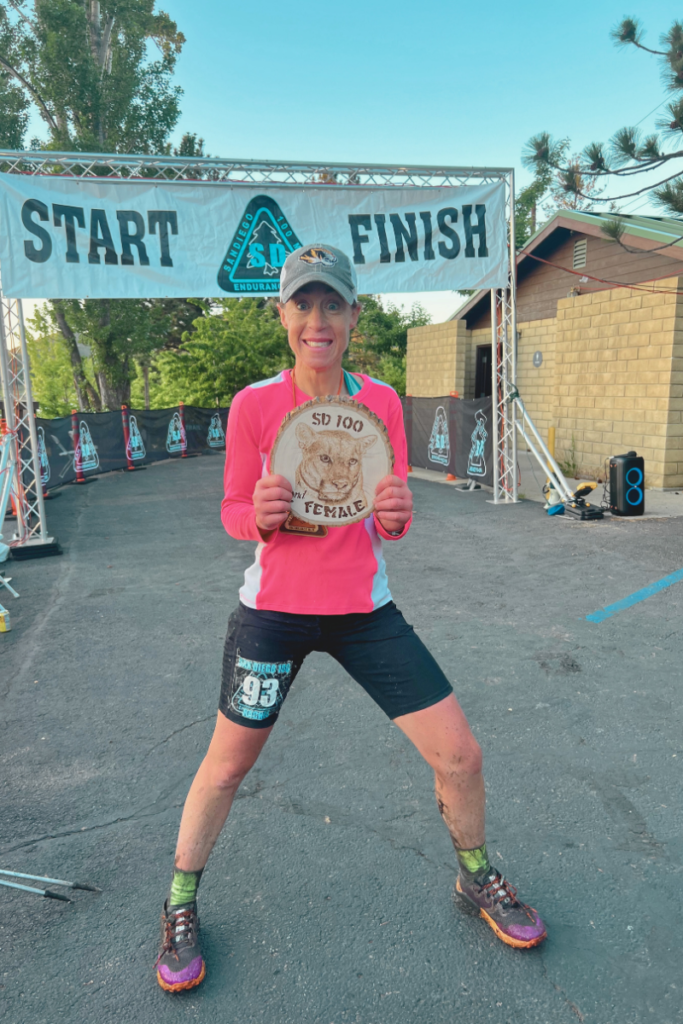
My first 50-miler was in 2017, and the following year, in 2018, I tackled my first 100-miler. That was a big leap. Running these long distances is as much a mental game as it is physical.
How did you get there?
In my twenties, I really got into running and did many road marathons. I ran the Boston Marathon three times and completed quite a few other marathons. I also got involved in triathlons, where you swim, bike, and then run. I started participating in Ironman competitions when I was around 25 to 27.
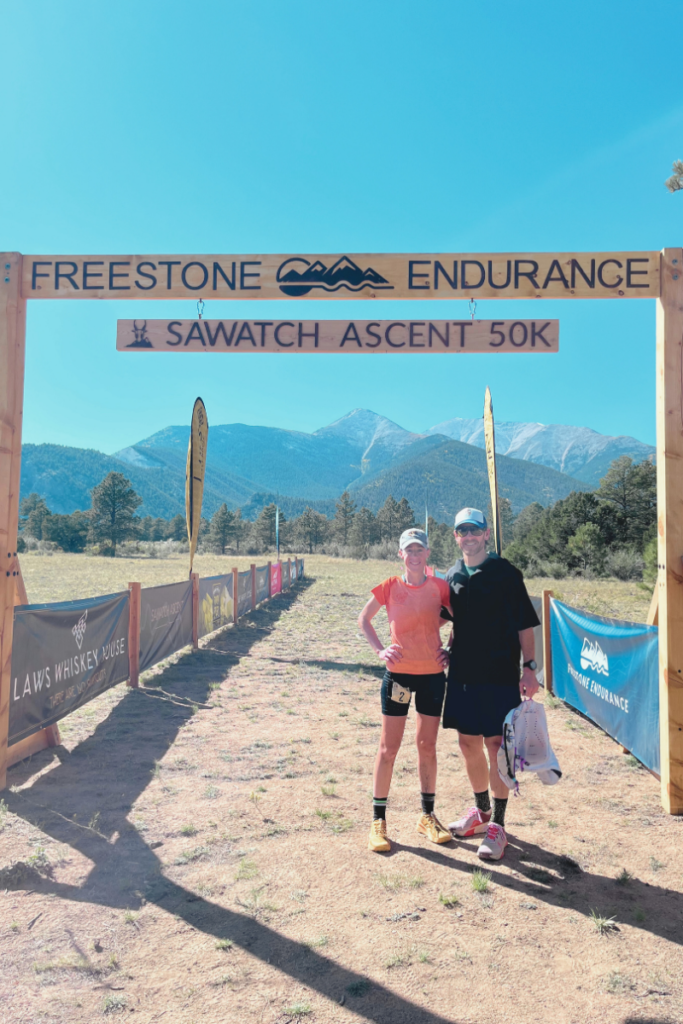
When I moved to Tennessee for residency, I began exploring longer running races. My first ultra-marathon was when I was 27 – a 50K race.
So it’s a process…
It wasn’t an overnight transformation; it was a slow and steady build.
Also, life changed—I got married, had kids, and didn’t run long distances for a while because, well, raising children takes a lot of energy!
Having kids is like an ultra-marathon? 🙂
I think having kids, being pregnant, and taking care of babies and toddlers is like training for an ultra-marathon. It’s the same concept: you’re up all night, you’re on your feet constantly, and you have to keep going even when you’re exhausted. In some ways, it’s the perfect preparation for endurance events! 🙂
That’s a funny and really great comparison.
Honestly, I truly believe that having kids is a huge advantage when it comes to ultra-marathons. The type of fatigue you experience as a parent, especially when caring for an infant, is strikingly similar to what you feel during an ultra-marathon.
It’s that bone-deep exhaustion, where you have to keep going no matter what. It’s the same mental and physical endurance. I’d even say it’s exactly the same!
What is important for ultra-runners?
Staying in the moment is critical—you can’t start a 100-mile race and think, „Oh no, I’m only two miles in.“
If you do, you’ll lose focus and motivation. Instead, you have to take it one moment, one step at a time. It’s all about breaking it down into manageable pieces and staying present. That mental discipline is what gets you to the finish line.
How do you feel during the race?
In every 100-mile race I’ve done, I can honestly say I’ve never felt good the whole way … because that’s impossible. You have to understand that you’re going to feel pain, and instead of fighting it, you sort of embrace it. You think, this is what I signed up for.
But when you embrace the challenge and stay in the moment, all of a sudden the finish line is there.
It’s like this weird time warp—on one hand, it feels like you’ve lived a whole lifetime, but it also goes by really fast. The experience is incredible. It’s an analogy for life—getting through trials and hardships but also experiencing moments of sheer joy. The highs and lows are amplified, and that’s what makes it so meaningful.
That’s very deep.
And I would go back to the analogy of having a baby. You train for nine months, go through this intense and difficult process, and then, in an instant, you have your child. Somehow, you forget the pain you endured … and then you do it again. Running a 100-miler feels very much the same—it’s hard, it’s painful, but it’s absolutely worth it.
What is your goal time in 100K?
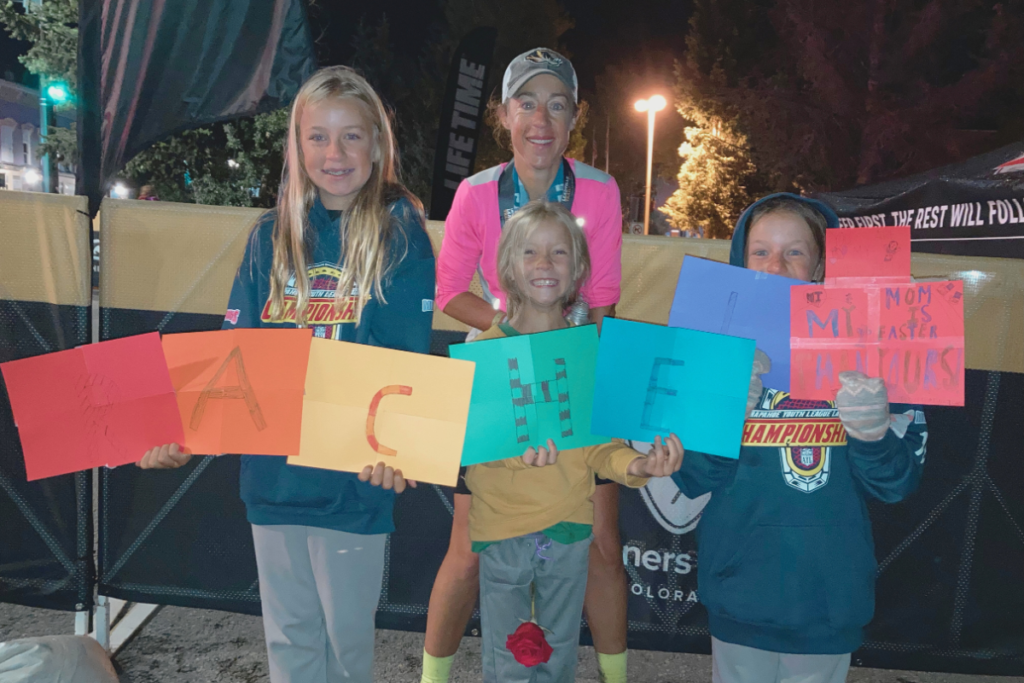
Every 100-mile race is different. For example, a race like Leadville is at high altitude, so it’s slower and has fewer steep climbs. My goal time for Leadville is usually around 23 to 24 hours. On the other hand, if I’m doing a flatter 100-mile race, my goal might be closer to 17 or 18 hours.
I remember the first time you told me about running 100 miles, and I was like, “How many days does it take?” And you just looked at me like: “You need to run as fast as possible.” 🙂
When I say “running,” what I mean is you’re moving forward. At certain points, you’re power hiking, and often, it’s about just moving forward—putting one foot in front of the other for 24 hours.
And you don’t stop to sleep during a 100-mile race.
Because if you stop, it’s essentially game over—it’s incredibly hard to get your body back into rhythm and moving again after resting. So, you push through the fatigue, even when it feels overwhelming.
What about breaks? What does the race look like through the eyes of runners?
In these longer races, every race has aid stations. On average, you’ll encounter an aid station about every seven to ten miles.
At these stations, you can refuel and reset. They usually have food and water, and it’s where your crew can meet you. JP often meets me at the aid stations with fresh clothes or specific foods that he knows I’ll need at certain points in the race. You stop to refuel, put new food in your pack, and refill your water—all those things happen at the same time.
These stops usually occur about every two to four hours, so you do have moments to pause, but they’re brief. You’re in and out in about three to four minutes. Otherwise, if you sit down and start taking off your shoes and stuff like that, it’s just hard to get going again.
How do you prepare for a race like this? What does preparation look like a month or two before?
My training plan for a longer race usually takes about three to four months. As you know, I exercise daily, but when I’m training for a longer event, I focus on progressively building my endurance. I’ll start incorporating longer runs one or two days a week.
My philosophy is to prepare my body for “time on feet.” This means training my body to stay awake and active for long durations, like the 24 hours needed.
Of course, I’m not doing 24-hour runs in training. But I’ll run for about four hours on a Saturday and then follow it up with a three-hour run on Sunday. This back-to-back structure helps simulate running on tired legs, which is critical for ultras.



So where is the main focus?
The key is learning to push through fatigue. You have to understand how to keep going even when your body feels exhausted. You have to know how to run when you’re tired, otherwise, you’re never going to finish.
How do you see the connection between physical health and mental health? And why do you do this to yourself? 🙂
That’s a solid question. Why do I put my body through suffering, right? 🙂
I think it comes down to this: my whole life, I’ve been involved in athletics, and it’s always been a positive feedback loop for me. Exercise gives me endorphins, makes my body feel good, and improves my outlook. Being active has always been a way to stay balanced and grounded, even though not everyone feels the same way about it.
For me, the positive feedback from those moments outweighs the suffering. And beyond the physical benefits, it’s given me something incredibly valuable: community. I’ve built circles of friends through running—people I bond with deeply—and those connections are really special to me.
The best conversations and the most therapeutic moments I’ve ever had are during runs with friends. When I run (or bike) with someone, we talk about everything—parenting, our kids, challenges—and we work through so many issues together.
It’s like having therapy, but instead of sitting on a couch, I’m moving through the miles. That’s where I find my best friends and my best therapist. Just this morning, I ran with a friend, and we had one of those conversations about life and family that leaves you feeling lighter and more connected.
The finish line is just a bonus. And being outside—on the trail or in the mountains—is something I can’t imagine living without. It keeps me going, physically and mentally. It’s a very positive feedback loop, and it’s a huge part of who I am.
Now, I feel like I want to start running… You should go to schools and talk like this.
HAHA, I understand what you’re saying. I love it.
Mom of 3: Balancing Family and Career
As you mentioned, you’re one of triplets plus one older sister. So how was that growing up?
It’s a really cool thing to say I’m a triplet. The dynamic in my household was tricky.
You have to compete for attention when you have so many siblings, especially sisters, right? That naturally bred an environment of competition—not necessarily for attention, but for accolades. It was an ingrained behavior, not something we openly acknowledged.
From the very start of life, whether it was in the womb or outside of it, I think we were just naturally competing for space and recognition.
That’s also the way we were raised. My parents had high expectations of us, and even if I had been an only child, they would have expected a lot from me. So there was always a sense of striving to meet those expectations. But that competition, while challenging, really shaped who I am today.
You are a working doctor, raising three kids with a busy schedule. How do you manage the household? What is the key?
We had three kids very quickly—they’re very close in age. Now they’re 13, 11, and 10.
At one point, we had three kids under three years old. That was a lot of chaos all at once. Honestly, we were drowning. 🙂 We were both working full-time and barely seeing each other. Every stage of life for our kids has come with a different secret to success.

What is the key to balancing it all?
A lot of people, when they have kids, end up forgetting who they are and what their own interests are, and that’s a recipe for disaster. You have to maintain a sense of who you are and what you love to do; otherwise, you’re not going to survive the stress.
The rest is logistics: managing your time well, keeping your calendar organized, understanding the schedule, and sorting out childcare. Those are boxes to check.
But true work-life balance comes from taking care of yourself and making time for what keeps you happy. And of course, there’s your spouse. You’ve got to make time for each other and remember that you’re married.
How are your kids doing? Do they follow in your footsteps?
Our kids are all athletic in their own ways. Ellie loves running. She’s on her school’s cross-country team, and she genuinely enjoys it. Seeing that happen is such an amazing feeling—watching your child do something you also love. It’s incredible. Sydney plays lacrosse, and Charlie is passionate about climbing. They’re involved in sports that I don’t have personal experience with, which is great because I’m learning so many new things by watching and supporting them.
Do you think kids should be pushed into sports? And what age is best to start?
I think it’s great for kids to get involved in sports early, around elementary school age—like five or six years old. At that age, I believe exposing them to a variety of sports is really beneficial. It gives them the chance to figure out what they enjoy most.
Sports, in general, are fantastic for building discipline. Team sports, especially, help kids learn how to interact and collaborate with others. Developmentally, it’s also important—they learn how to use their bodies in healthy, active ways.
This is actually my professional focus, so I’m passionate about it. Moving your body at a young age and trying multiple sports is great for preventing injuries and setting up a lifetime of physical health. From a mental health perspective, sports are also key. Whether it’s an individual sport or a team sport, I think participating in sports teaches important life skills.
I’d much rather have my kids busy—even if they’re overscheduled—than sitting on their phones all day. It keeps them active, engaged, and out of trouble.
Those skills are going to be very needed later in life.
Another huge benefit is learning how to face adversity and navigate peer relationships. When kids are in sports, they encounter moments of conflict and challenges, and they learn how to handle those situations. Think about how much that prepares them for life!
You might deal with conflicts daily at work now, but those early experiences—like working with a team or resolving issues in soccer at age 12—set the foundation. By the time you’re 25 and in the workforce, you already know how to deal with challenges and interact effectively with others.
Sports aren’t just about physical fitness; they’re about developing crucial life skills and understanding how to work with other people.
Start with one sport or try multiple sports?
Definitely multiple sports. It’s a great approach.
Professionally, we don’t encourage kids to focus on just one sport year-round because it can lead to burnout and injuries. Instead, we recommend that kids explore multiple sports when they’re younger and then, potentially, specialize in one as they get older—typically after age 12.
This way, they develop a variety of skills and discover what they truly enjoy.
On Cultural Differences Between the USA and Czech Republic
What do you think about the differences between the U.S. and Czech Republic?
1. In Healthcare Systems
From the perspective of working in healthcare as a physician, it would be incredible if healthcare were free. The way we make decisions on a day-to-day basis has so much to do with the type of insurance a patient has. Can they afford a certain treatment? Can they pay for the tests we recommend? These financial limitations often affect the quality of care we can provide.
On the flip side, if healthcare is free, access to certain tests and procedures can become more difficult due to limited resources being spread across a larger population. That’s why there’s no perfect system—it’s a challenging balance to strike.
Czechs complain about waiting times all the time.
In reality, it’s okay to wait for things that aren’t life-threatening, right? Say I tear a ligament in my knee—it’s actually fine to wait two months to get that fixed. You’re not dying. So those kinds of delays are acceptable.
Unfortunately, in the United States, having immediate access to healthcare often makes people feel very entitled. They’ll come to see me and say, “I want this now. Right now.” And I have to tell them, “Well, this is not an emergency, you’re not dying, and it’s okay to wait two days for this test.” That’s not always an easy conversation, and sometimes people get upset.
So what do you see as the biggest problem?
When I had to go to the emergency room because I had a kidney stone and was in serious pain, I hesitated. I thought, “Well, this is going to cost $500. Maybe I can wait it out.” And that’s a terrible mindset to have. I shouldn’t have to think that way. If I’m in pain, I should feel confident going to the emergency room and having it taken care of without worrying about the cost.
It’s tough. It’s definitely more of a thoughtful process here in the U.S. You have to ask yourself, “Should I go to the doctor? Is this really necessary?” And that’s not how it should be. It’s crazy when you think about it, but that’s the reality we live in.
People shouldn’t have to choose between seeking medical care and worrying about how they’ll pay for it. It’s heartbreaking when someone hesitates to visit the emergency room or pursue necessary treatment due to financial concerns. Everyone should have the ability to access medical care when they’re sick.
For the patients I see—primarily children—I would absolutely love for healthcare to be free. I often encounter kids whose parents aren’t insured, and that creates a significant problem. However, in the U.S., most children whose parents lack private insurance are eligible for government programs, which provides some relief. But that’s a separate and complex conversation.
2. Maternity Leave
I would definitely prefer longer maternity leave than what I’ve experienced—absolutely, one hundred percent. There’s no set maternity leave for anyone here in the U.S. The majority of people who work a full-time job and have a baby have to save up their time off to use it when the baby is born. On average, people take about six weeks off after having a baby.
When I had Ellie, my second child, I only took five weeks off because I had to get back to work—they needed me to return. I was absolutely exhausted. It led to health problems of my own because I was working while taking care of an infant. I was never sleeping, and it was bad. Really, really bad.
What is your dream version?
We should have better maternity leave. It’s awful the way it is now. It’s inhumane. It’s not good for moms or for families.
I think at least a year off seems like a perfect timeframe.
When I had Sydney, I was able to take six months off because it was between finishing residency and starting a job. I really enjoyed that time. I felt like I had things to do, I wasn’t bored, and I was able to really enjoy the time with my baby. I could’ve easily stayed on maternity leave longer and been perfectly happy. A year would be ideal.
What about childcare for infants?
Childcare during that first year is extremely expensive. If you have a baby, you’re paying a lot of money to have someone else take care of that child while you’re working. That’s a huge issue as well.
3. Having a Au Pair
Because of the maternity leave system, it is popular to have an Au Pair. That’s how we first met. What was it like to have an Au Pair?
When we first started the au pair experience, there was definitely some fear. I mean, you don’t know this person, and they’re taking care of your kids.
At first, when I heard about having an au pair, I thought, “Oh, I’d never do that. That seems crazy.” My sister Katie had an au pair for several years before we did, and I remember thinking, “What is she doing? This is crazy.” Then, I came to realize that I needed to do it out of necessity, and I thought, “We’re doing this.” Once we started, I understood how amazing the experience could be.
How Was It Having Someone Else Live in Your House?
I think it requires an immediate understanding that the au pair is there to help you but also to experience the United States. For me, the transition turned out to be easier than I expected.
I do think, though, that for many people, it’s intimidating to have someone live in their home. A lot of people shy away from the experience because of that. But once you take the leap and actually do it, you realize it can be a fantastic experience.
That said, I believe both parties need to understand what the relationship is. The reason our experience with you was so successful was because you obviously worked really hard, and we trusted you. At the same time, you took full advantage of the opportunity to get to know the United States, engage in cultural exchange, and help us learn about the Czech Republic.
It’s a two-way street, right? It’s not just me providing a home for you. I’m providing something for you, and you’re providing something for me. When both sides understand that, it works beautifully. It becomes such a great relationship.
We did have another experience after you, where the person treated it more like we were just providing a home for them, and that didn’t work well at all.

Did you notice any differences between nationalities?
I certainly don’t want to sound insensitive or like I’m stereotyping, but I would say that you and Theresa, both from the Czech Republic, worked really hard. I didn’t have to tell you what to do—you just did it. You absolutely understood the assignment, and you were awesome.
On the other hand, there were differences with other nationalities. For example, we also had a Brazilian au pair and a German au pair. Without generalizing too much, I’d say the work ethic and approach to responsibilities were noticeably different. It’s a dynamic that really varies by individual, but some cultural differences can stand out.
To be cliché, you really understood the assignment—you knew exactly what to do. Katie from Brazil was the same way. She had a clear understanding of her role and worked hard when she was on the job. She was committed and reliable, and it was obvious that she took her responsibilities seriously.
In general—and I’m going to sound a bit insensitive here—but my experience, as well as the experiences of friends, is that au pairs from Western Europe didn’t work as hard. Often, they seemed to view the arrangement more as a chance for us to take care of them, offering access to our home, car, and experiences. In those cases, it felt like they were taking advantage of the situation.
After you left and our next au pair arrived, the contrast in work ethic and approach was very stark. It was an immediate and noticeable difference.
4. Hardworking Americans and Their Vacation Time
In my opinion, Americans are incredibly hardworking people. America is often seen as a place where you can have everything—a land of opportunities where people seem to thrive and enjoy life to the fullest.
However, what they don’t often realize is just how hard Americans work to achieve that lifestyle.
Honestly, I agree with you on this. Our culture is very much centered on work, work, work. You push yourself all year long, and then, maybe, you squeeze in one vacation.
How many days, weeks, or months of vacation do you take?
If I add up the days I actually take off, it’s probably about two weeks. Do I have the opportunity to take more time off? Absolutely. My contract, my job allows me to take more time off, but if I don’t work, I don’t get paid. 🙂
So you can take more, but nobody pays you? 🙂
Exactly. And for someone like me, who’s naturally competitive, it’s a hard thing to let go of, right? Because I feel like if I’m not working, I’m not making money. And then it sort of turns into this internal competition with myself, which sounds really dumb to say out loud, but it becomes this self-imposed challenge. But in the end, I should take more time off. I’m very aware of that. It’s obvious to me, but it’s hard to do because if I don’t work, I don’t make money.
On Life Lessons
One piece of advice you would give to your younger self?
When I graduated from high school, I had clear goals. I needed to go to college. I put the blinders on and sort of didn’t see the outside world beyond that. If I could do it over again, I would’ve told my younger self to slow down, take a break, and take advantage of the time I had before having kids and more responsibilities.
I would’ve gone abroad. I would’ve explored more. That’s something I definitely would’ve done differently.
That’s the biggest thing. I wish I had looked outside of myself and outside of the United States a little more and realized there’s so much more out there. I wish I had taken advantage of that, but I didn’t.
That’s what I’m going to tell my kids when they get to college: take your time. There’s no reason you have to go straight from college to graduate school or from college to a corporate job. Take your time and use those years to learn more about yourself and the world around you.
Which book would you recommend or has inspired you the most?
I don’t know if I have one specific book. I would tell you that my inspiration has probably come more from podcasts and listening to people audibly.
There is a specific female author in the United States named Glennon Doyle. She’s someone who helped me understand how to think outside the box and how to build better relationships—with my kids, with my spouse, and in general. She’s been a big influence on me.